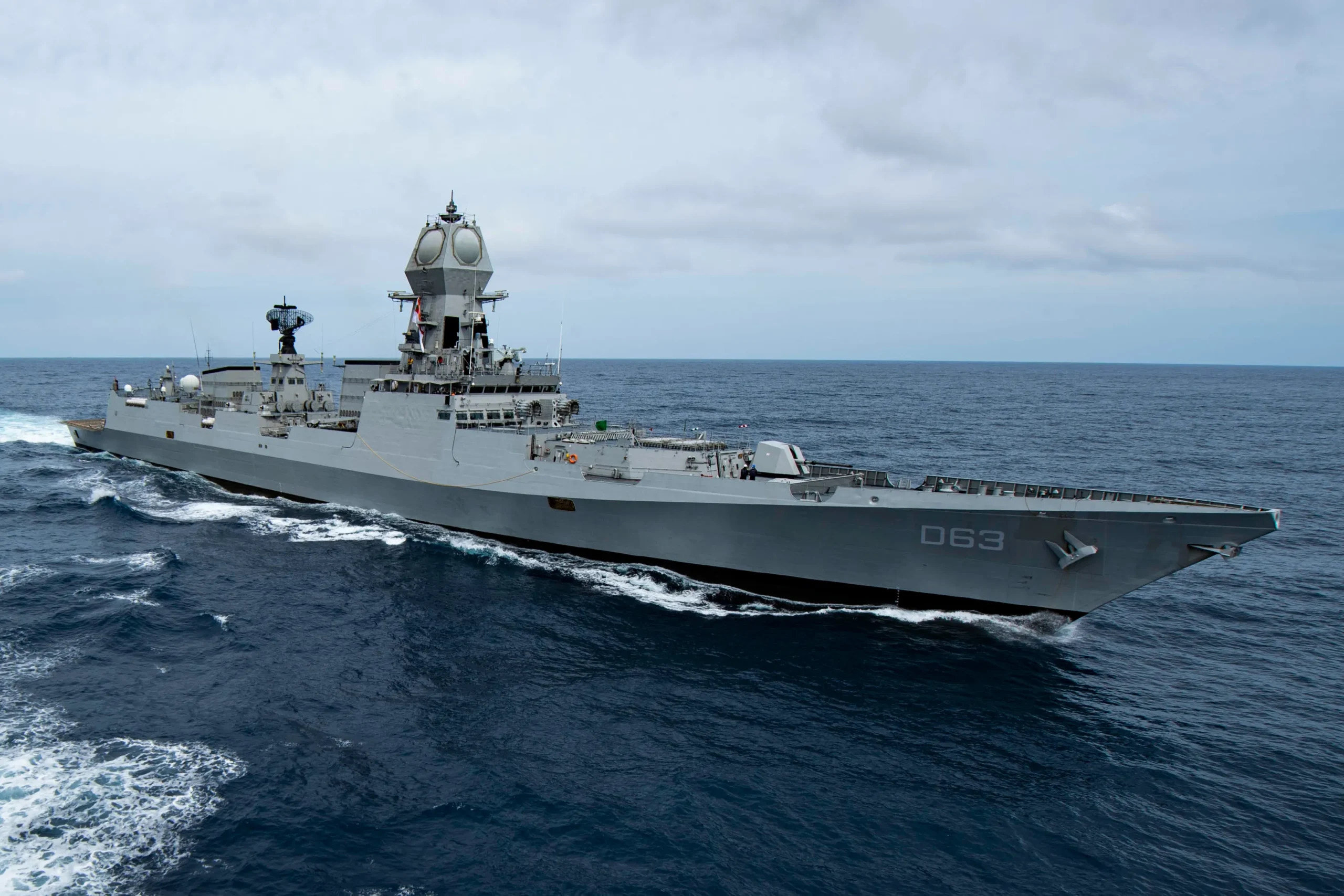





The Chinese People’s Liberation Army’s Western Theatre Command (WTC) occupies a crucial position in India’s security calculus due to the long, difficult, and contested nature of the border it shares with Tibet and Xinjiang. Since its formal establishment in 2015-2016 reforms, it has seen massive upgrades in military capabilities in terms of modern equipment, new bases, and improved logistics. Although the pace of reforms was slow initially, it accelerated after the Doklam incident in 2017. The Galwan conflict in 2020 further intensified the process.
Although India and China fought a full-fledged war in 1962, engaged in two short conflicts in 1967 and 1987, and experienced several smaller incidents over the years, the PLA has never posed as significant a threat to Indian security as it does now.
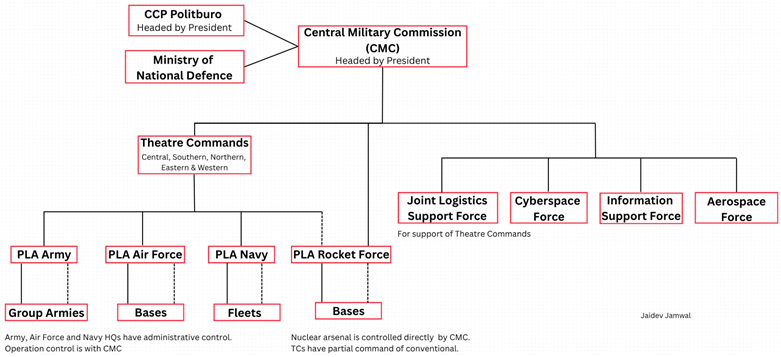
The WTC was created as part of President Xi Jinping’s comprehensive military restructuring programme. It replaced the former Chengdu and Lanzhou Military Regions, consolidating vast areas including Xinjiang, Tibet, Qinghai, Sichuan, Chongqing, and Gansu under a single joint command structure. The rationale was to streamline operational control, enhance joint operations, and align the PLA with modern theatre-level warfighting requirements. The WTC’s mission profile includes border defence along the LAC, internal stability in Xinjiang and Tibet, and readiness for limited, high-intensity conflicts under informationised conditions.
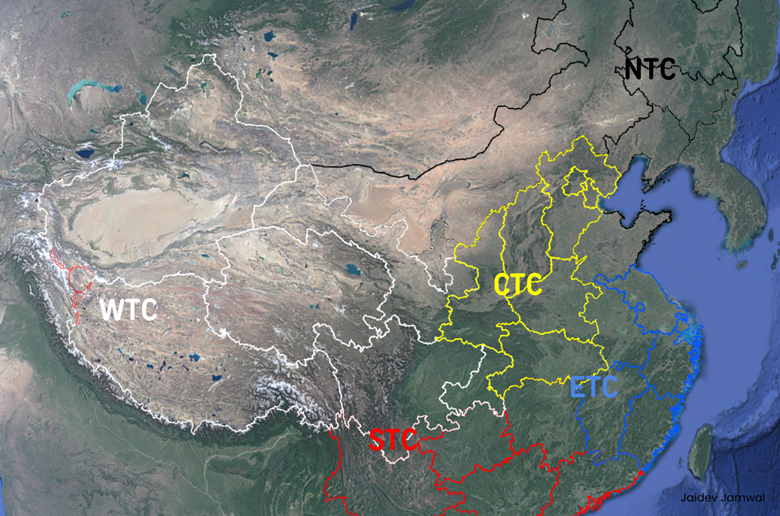
Tibet’s and Xinjiang’s topographies feature some of the world’s coldest and highest-altitude plateaus, making mobility, sustainment, and acclimatisation unusually demanding. The high altitude limits the payload carrying capabilities of aircraft, makes combat operations relatively more difficult, and takes a heavy toll on humans & machines. The recent border incidents were a rude wake-up call for the Chinese, when they realised that many of their older and even some newer equipment and doctrines were not good enough for rapid combat operations in the region. These factors involved in high-altitude warfare have driven heavy investment in logistics, infrastructure, and medical support facilities. The creation of the Joint Logistics Support Force (JLSF) was a major step toward solving this and a few older issues on a wider scale.
The new force was created by combining the logistics assets of other forces, as well as creating a few new ones. JLSF HQ in Wuhan is called Wuhan Logistics Support Base and has five subordinate Joint Logistics Command Centres (JLSC), one assigned to each Theatre Command. These are responsible for all types of sustainment and support activities like transport, storage, maintenance, human resource management, medical, and construction. The other services have their own service-specific last-mile logistics assets separate from JLSF. Apart from that, all support units extensively utilise civilian infrastructure and organisations for military operations.
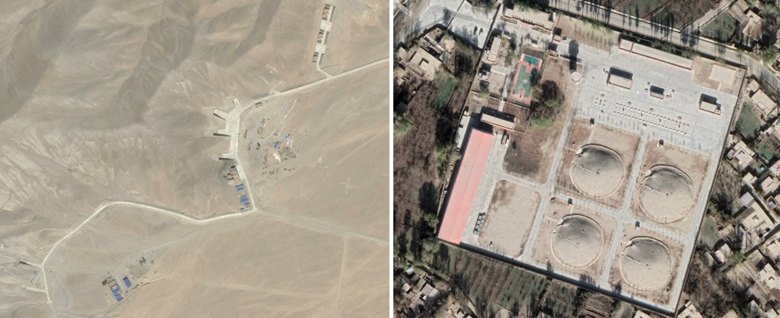
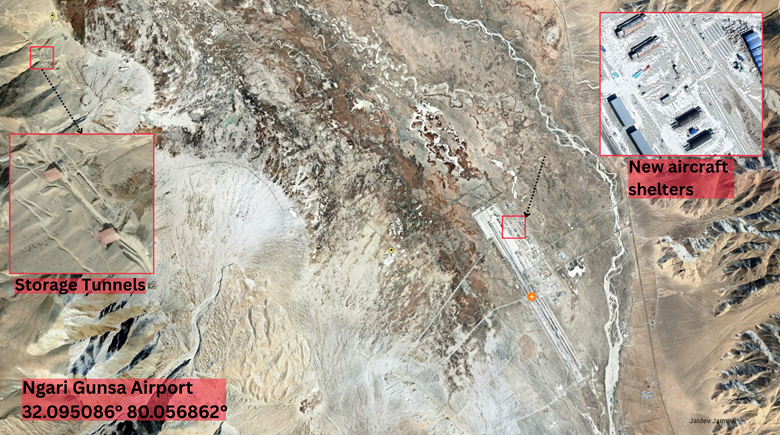
Military forward stockpiling has visibly increased since 2020. Multiple new facilities near Shigatse, Lhasa, and Hotan can support extended military operations. These depots reduce reliance on long-distance and fragile supply chains. A few of these storage facilities are underground or dug into hillside tunnels. This makes disabling these logistics nodes more difficult using traditional air or missile strikes. Across China, many of these logistics nodes have additional railway connectivity.
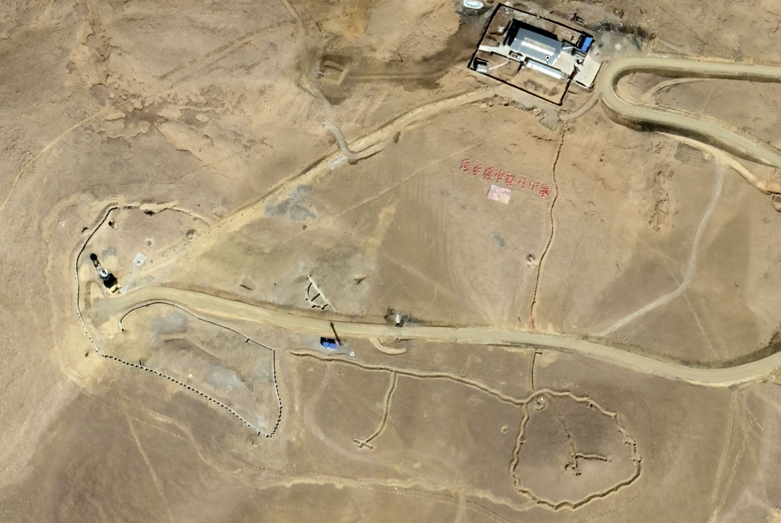
Additionally, there has been a marked increase in the number of battle fortifications, trenches, and semi-prepared bases along the Line of Actual Control (LAC). Latter are mostly dug-up earthen berms and semi-permanent structures, which can be quickly made operational and used as staging areas or supply dumps by ground forces for combat operations.
PLA can also utilise 5-6 Brigades of PLAAF Airborne Corps (PLAAFAC), which has seen massive expansion and upgrades in the past few years. Although there is no PLAAFAC base in WTC, there are enough resources for rapid deployment in the sector if needed.
Dual Use Infrastructure and Border Villages
China has built numerous “Xiaokang” (prosperous) border villages along sensitive stretches of the LAC. The local Tibetans are being “encouraged” to settle close to the border, using various means that the CCP has at its disposal. These settlements represent a subtle but significant form of positional advantage, which includes:
- Forward observation and signalling presence.
• Logistics staging and emergency shelters.
• Civil-military fusion nodes enabling rapid PLA deployment.
PLA Ground Forces
WTC Army’s structure is a bit different from the other commands. It has two regular modern Group Armies (GA) and two Military Regions (or Districts):
- 76th and 77th Group Armies
- Tibet Military Region (TMR)
- Xinjiang Military Region (XMR)
Group Armies (GA) usually have five to six Combined Arms Brigades (CAB) plus the following:
- Artillery Brigade
- Air Defence Brigade
- Army Aviation Brigade
- Special Operations Brigade
- Engineering and Chemical Defence Brigade
- Service Support Brigade
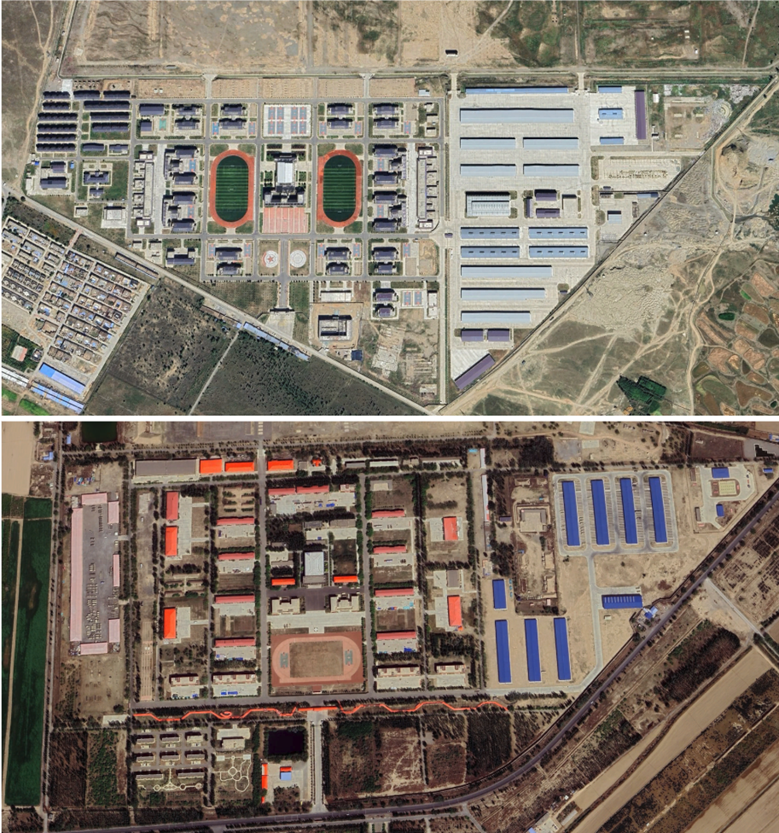
Each CAB usually has 5000-6000 troops in total. The CABs can be Heavy, Medium, Light, or Amphibious depending upon the equipment profile. Each one comprises of:
- 4 Combined Arms Battalions (CABn)
- 1 Artillery Battalion
- 1 Air Defence Battalion
- 1 Service Support Battalion
- 1 Reconnaissance Battalion
- 1 Combat Support Battalion
Concerning the WTC, at least one CAB of 76th GA, perhaps the 12th CAB, has been disbanded and its assets transferred to the PLA Rocket Force. Also, according to some sources, the Special Operations Brigades (SOB) are going to be reorganised into smaller units directly attached to the GA HQ.
The Tibet Military Region has three CABs and six supporting brigades as listed above. Its Area of Responsibility (AOR) includes Tibet’s borders with India and Nepal. The Xinjiang Military Region comprised four traditional army divisions, even when all other units had been converted into a Combined Arms structure with modern equipment. The poor performance of the troops in near full-blown combat-like situations in 2020 led to rapid changes in orbat and equipment profile. Its traditional Divisions were converted into Combined Arms Divisions (CADs), each comprising three Combined Arms Regiments (CAR) and one regiment each for Firepower, Artillery, and Service Support.
Most of these army formations have integral UAV and UGV units for a wide variety of roles, including reconnaissance, attack, and logistics. Additionally, each GA has additional brigades or regiments for Electronic Counter Measures (ECM), Intelligence, Surveillance and Reconnaissance (ISR), and Communications.
Border Defence Regiments and Militias
Chinese Border Defence Regiments are typically subordinate to GAs or provincial military commands, depending upon the sector. These are responsible for border patrol, surveillance, and general security. Each regiment consists of three to four infantry battalions and one battalion each for artillery, service support, and combat support. Some BDR artillery battalions are equipped with 122 mm howitzers and MBRLs, in addition to short-range air defence equipment and ATGMs. There are 22-23 BDRs deployed along the WTC borders.
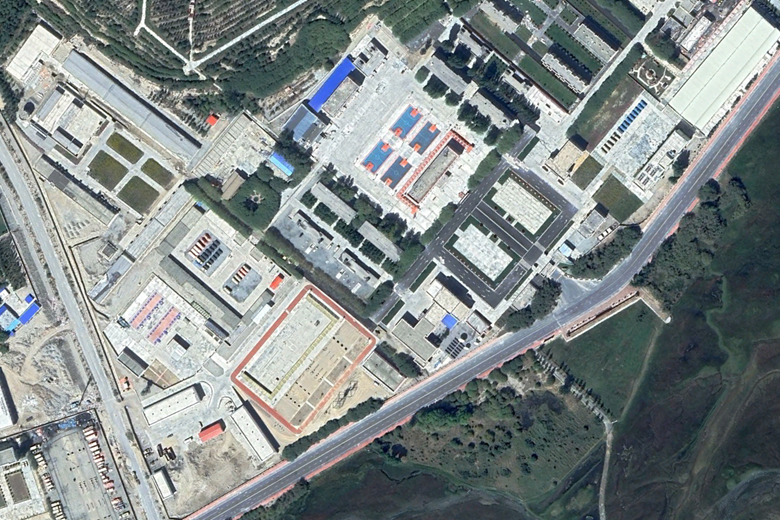
These units focus on patrolling, early warning, infrastructure protection, and rapid response to incursions rather than large-scale offensive operations. In sensitive sectors, particularly along the Indian border, they are closely integrated with militia, paramilitary forces, and local authorities to ensure a continuous presence and control.
Other than this, Tibet and Xinjiang have a few thousand militiamen tasked with internal security, disaster relief, and production labour, among other things. The one in Xinjiang is called Bingtuang or Xinjiang Production and Construction Corps (XPCC). It’s responsible for settling ethnic Han migrants to even out the population ethnicity proportions with respect to native Uighurs, operating large agricultural and industrial projects, running detention and re-education centres, and internal security, including riot control. Its members assisted PLA combat operations inthe 1962 war.
Air Bases and PLA Air Force
For a long time, the PLA Air Force (PLAAF) had a very limited offensive capability in WTC compared to the rest of the Theatre Commands. The number of air bases was pretty small considering the AOR, and even those bases were scattered and located quite far from India. Additionally, the high altitude limited the payload carrying capability of all aircraft. The aircraft themselves were also mostly older-generation F-7 and JH-7s.
This has rapidly changed over the past 6-7 years with new airbases with long runways close to the border, better support infrastructure, and modern aircraft. The existing airbases have seen multiple upgrades, which include longer runways, hardened aircraft shelters, storage, and logistics facilities.
Presently, PLAAF has eight to ten Air Brigades in WTC armed with J-10, J-11 (Su-27 copies), J-16, Su-27, and J-20. Two to three air brigades are still flying older J-7 and JH-7s, but they will likely shift to newer aircraft over the next two to four years. H-6 bombers equipped with long and short-range cruise missiles provide a fairly powerful capability of delivering firepower over extended ranges. Some of these H-6 aircraft have EW and tanker versions too.
Additionally, PLAAF has one transport division equipped with Y-9 and Y-20 aircraft and one transport brigade equipped with IL-76 aircraft. The transport facility is further augmented by two Transport & Search and Rescue (SAR) brigades equipped with Y-5, Y-7, Z-20, and Mi-17s helicopters. Additionally, there is one Airborne Early Warning and Control (AEW&C) brigade in Golmud flying KJ-500 and Y-9Z aircraft.
There is also one UAV brigade in the WTC along with a few small detachments. For helicopter and drone operations, several new heliports and extended helipads have been constructed, nearly all along the border. These enable rolling take-off for helicopters, which helps them take off with meaningful payloads even at such high altitudes.
Air Defence
PLA Air Defence consists of multiple layers of Surface To Air Missiles (SAMs), radars, anti-aircraft guns, with the Army as well as the Air Force. As mentioned earlier, each GA has one air defence brigade to provide layered, mobile air and missile defence for ground forces and critical assets during operations. They are equipped with HQ-16 (Russian Buk-M1 derivative) SAMs for medium-range air defence, HQ-17 (Russian Tor-M1 copy) and HQ-7 (French Crotale copy) SAMs for short-range defence. Close-in defence is provided by HQ-11, FN-6 type Man Portable Air Defence Systems (MANPADS) and various types of static and self-propelled air defence guns such as PGZ-09, PGZ-04, etc.
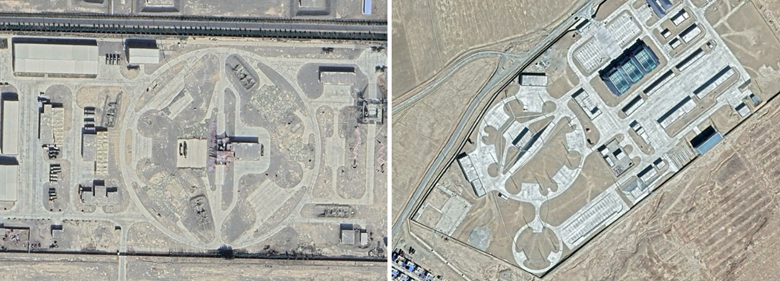
PLAAF air defence assets consist of various types of radars (active and passive), multiple SAM types, and electronic warfare (EW) assets. Over the past few years, PLAAF has commissioned a large number of long and medium-range radars facing the Indian borders to plug gaps in its surveillance capabilities. There are four to five radar brigades, each with four to six battalion-level units assigned to a permanent radar station equipped with long and medium-range radars. The SAM component includes three air defence brigades equipped with long-range HQ-9 (S-300 copy), S-300, and perhaps HQ-22 SAMs.
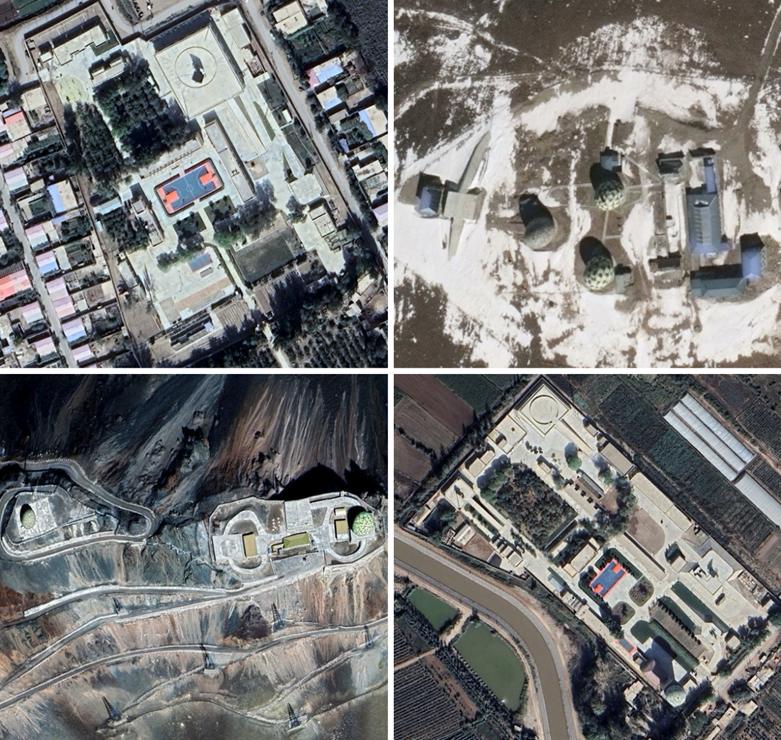
PLA ground-based long-range fires capability consists of PLA Rocket Force (PLARF) for long ranges and some units of PLAA for short to medium ranges. PHL-03 and PHL-16 Multiple Launch Rocket Systems (MLRS) with 120-150 km and 300-500 km ranges, respectively, provide a pretty substantial firepower capability to PLAA for their respective ranges.
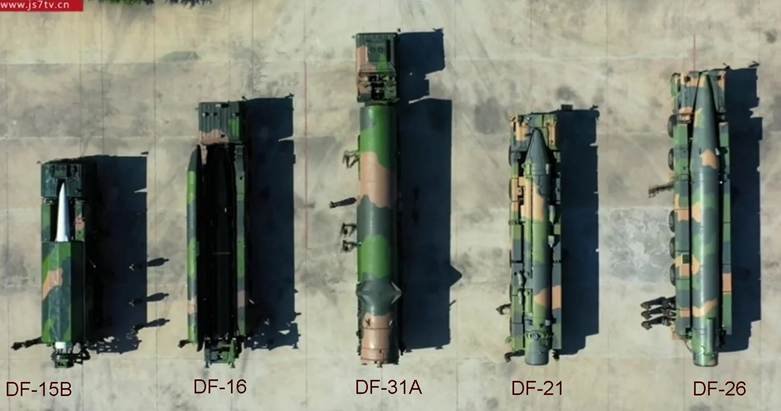
For longer ranges and other mission profiles, PLARF has a large inventory of ballistic and cruise missiles such as DF-17, DF-21, DF-26, DF-31, and CJ-10, among a few others. PLARF HQ commands 6 Missile Launcher Bases and one Base each for Nuclear Stockpile, Engineering, and Training, plus a few other units for training, reconnaissance, and technical support. “Base” in this context is a unit, rather than a ground facility. Each of these six Missile Bases has six to eight Missile Brigades, each with four to seven Launch Battalions plus units for logistics, storage, and technical support. These Battalions have two to four Launch Companies, which can be equipped with conventionally armed or nuclear missiles. The former can have up to eighteen missiles in a battalion, while the latter usually have three to six missiles. These missiles are all on road mobile TELs and can be quickly transported from rear areas or hidden inside most of the storage tunnel facilities mentioned earlier.
The command of nuclear missiles is with CMC, while Theatre Commanders control the conventional arsenal. Two of the largest Chinese nuclear missile silo facilities are located in Hami and Julin, both in the geographical area of WTC.
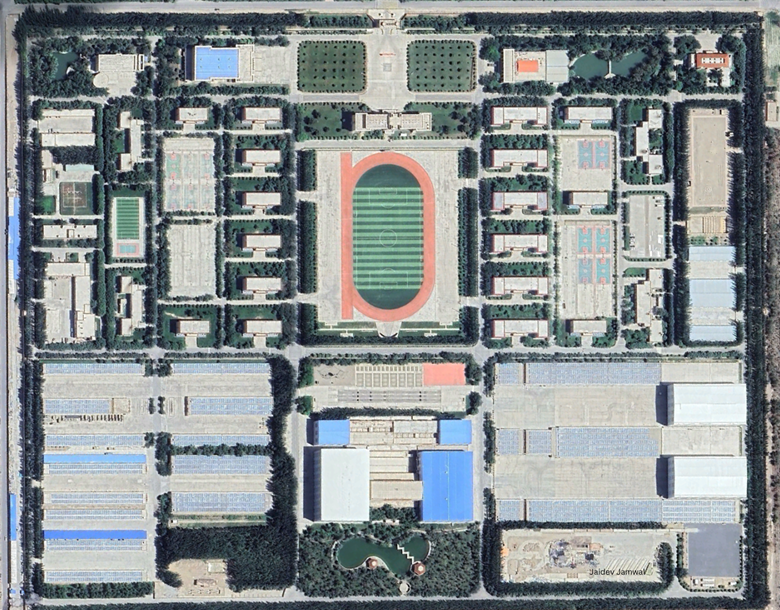
The Chinese Strategic Support Force was recently split into three new forces for better utilisation of resources and centralised control. Its functions were redistributed into three new arms directly under the Central Military Commission: Information Support Force, Cyberspace Force, and Aerospace Force. Like PLARF, each of these forces is commanded directly by the CMC. Some assets can function under the command of Theatre Command HQs, but the exact procedure is not clear yet.
Information Support Force (ISF): Within WTC, the ISF underpins joint command by integrating theatre C4ISR networks, data fusion, and battlefield management systems. It enables faster sensor-to-shooter loops across ground, air, and sea forces.
- Cyberspace Force (CSF): The CSF supports military operations by conducting theatre-level cyber reconnaissance, network attack and defence, targeting adversary Command & Control, ISR, logistics, and civil-military networks. In a war, cyber operations would shape the information environment before and during kinetic operations.
- Aerospace Force (ASF): The Aerospace Force provides PLA with space-based ISR, SATCOM, and PNT, critical given sparse infrastructure and long distances. It also supports counter-space and space control missions to protect Chinese space-enabled targeting and navigation while degrading adversary space operations.
The disinformation campaign observed during Operation Sindoor, which involved the coordinated use of fabricated videos and images, propaganda articles, and the systematic flooding of social media platforms and selected news outlets with false narratives, was very likely orchestrated by elements of the Chinese Cyberspace Force in coordination with affiliated entities. The scale, coherence, and rapid execution suggest a high degree of central planning and technical capability. Taken together, these indicators illustrate how contemporary information warfare can be conducted at speed and scale, shaping perceptions and decision-making well before kinetic military effects become visible.
Conclusion
China’s Western Theatre Command has undergone a profound transformation over the past decade, accelerated sharply after 2017 and especially after 2020. The combination of organisational reforms, sustained infrastructure development, improved logistics, expanded air defence, upgraded missile capabilities, and deeper integration of information, cyber, and space domains has significantly enhanced the PLA’s ability to conduct joint, high-intensity operations against India. While geography and altitude continue to impose constraints, these no longer act as decisive limiting factors. The WTC today represents a force designed not only for border management or crisis response, but for prolonged, multi-domain conflict under informationised conditions.
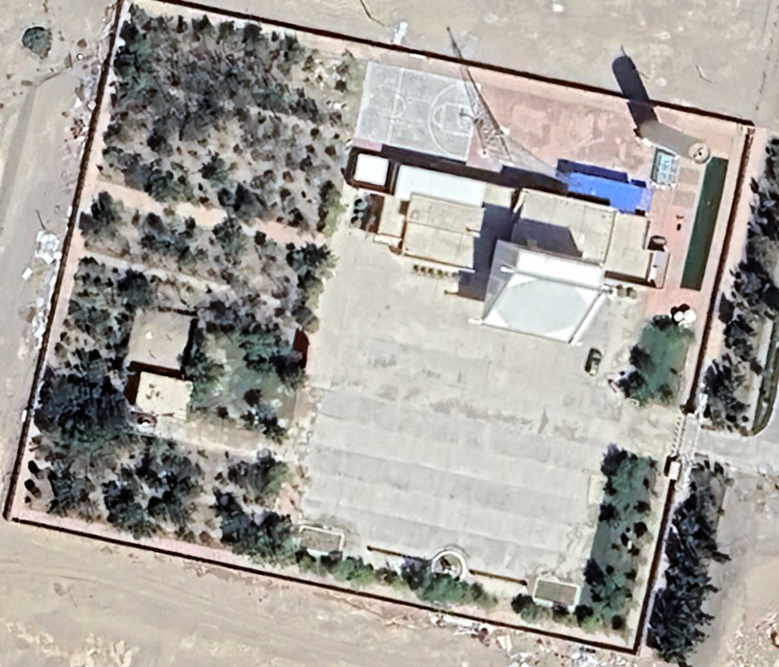
NOTE: All images are from Google Earth unless specified otherwise.